The Environmental Cost of Innovation: A Strategic Framework
— by
Steven Haynes
{
“title”: “The Environmental Cost of Innovation: A Strategic Framework”,
“meta_description”: “True innovation requires a shift from unchecked expansion to circular systems. Learn how top-tier leaders balance technological growth with ecological impact.”,
“tags”: [“corporate sustainability”, “innovation strategy”, “circular economy”, “operational efficiency”, “resource management”],
“categories”: [“Business”, “Technology”],
“body”: “
The Decoupling Myth
For decades, the standard corporate narrative promised that technology would decouple economic growth from resource consumption. History has proven otherwise. As digital infrastructure demands escalate and industrial output scales globally, the environmental footprint of innovation often tracks linearly with financial performance. High-performance leaders must now move past the fallacy of ‘green growth’ and address the systemic reality that every new feature, server rack, or product line carries a hidden tax on the physical world.
Operational excellence is no longer defined merely by efficiency and speed. It now requires a rigorous strategic assessment of the environmental externalities generated by technological advancement. If your output relies on infinite resource extraction, your long-term viability is already compromised.
The Operational Paradox of AI Scaling
Artificial Intelligence represents the most concentrated form of innovation in modern history, yet its physical foundation is remarkably fragile. The pursuit of larger neural networks has triggered an arms race in compute power, which directly translates to exponential increases in electricity consumption and water usage for cooling data centers. Leaders pushing for rapid AI implementation often overlook these hidden costs until they manifest as regulatory hurdles or supply chain fragility.
A mature approach to systems and operations demands that we treat compute as a limited commodity rather than an infinite utility. We must optimize model training to minimize carbon intensity. This is not just a moral obligation; it is a hedge against the inevitable rising costs of energy and the carbon taxes that will soon be priced into every digital transaction.
Circular Design as a Competitive Advantage
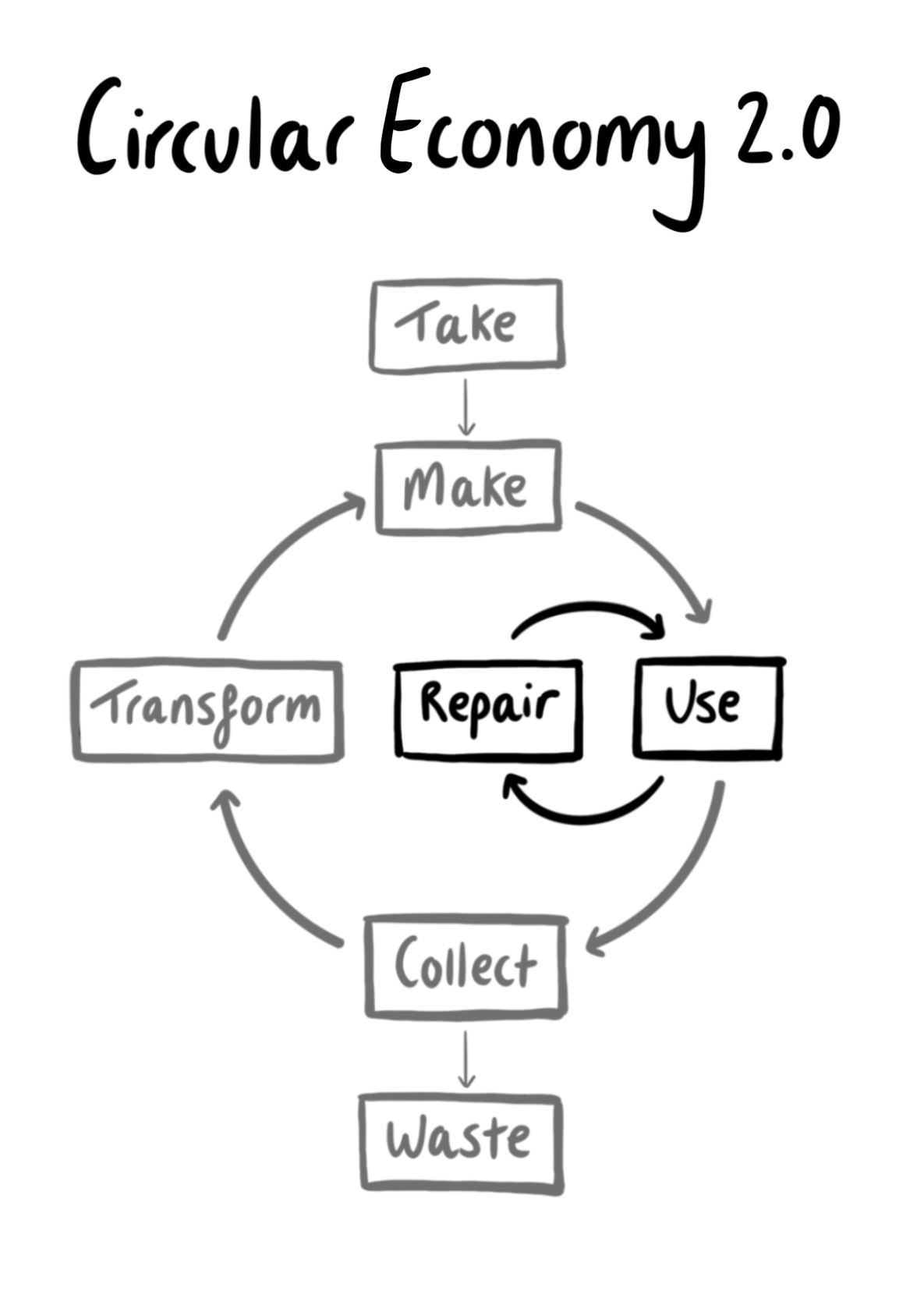
Innovation usually focuses on the ‘new’—new capabilities, new markets, and new user experiences. A high-performance mindset forces a transition from linear ‘take-make-waste’ models toward circularity. This requires rethinking the product lifecycle at the design stage. By prioritizing modularity, reparability, and material recovery, companies can insulate themselves from raw material price volatility.
True leaders identify these environmental constraints as a forcing function for creativity. When an engineer is told that a product must be 90% recyclable or entirely energy-neutral, they stop looking for incremental improvements and start pursuing structural breakthroughs. This type of constrained innovation often leads to the most defensible market positions.
Decision-Making in the Anthropocene
Effective decision-making in a world of finite resources requires a fundamental adjustment to the internal rate of return calculation. Projects that appear profitable on a quarterly ledger but exacerbate resource depletion create technical and reputational debt. Leaders who ignore this trajectory are not playing the long game; they are simply shifting liability to future versions of their company.
Explore more on the intersection of modern management and technical progress at The BossMind Network to refine your approach to scaling infrastructure. If you prioritize legacy over short-term metrics, your organization will possess the resilience to thrive as the cost of environmental damage becomes an undeniable economic factor.







Leave a Reply